Rose colours for Valentine’s Day: Which One Fits Your Relationship?
Ever walked into a flower shop, seen a whole wall of roses, and thought,
“Okay… but what colour roses should I actually get?”
Is it always red for love?
Can you give yellow roses on Valentine’s Day?
Are blue or black roses too much… or secretly perfect?
You are not the only one confused. Red is the classic, but it is definitely not the only love language in the rose world. Every colour sends a different message about your relationship.
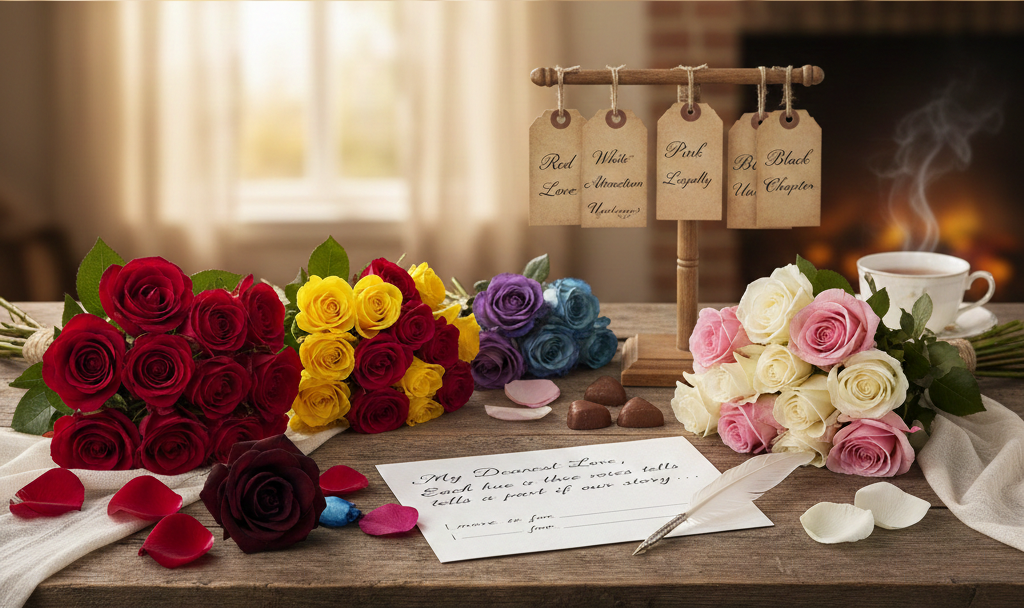
Here is the quick cheat sheet:
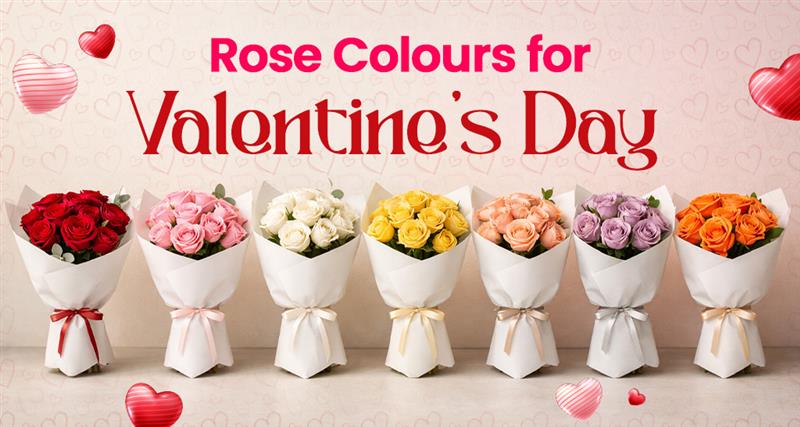
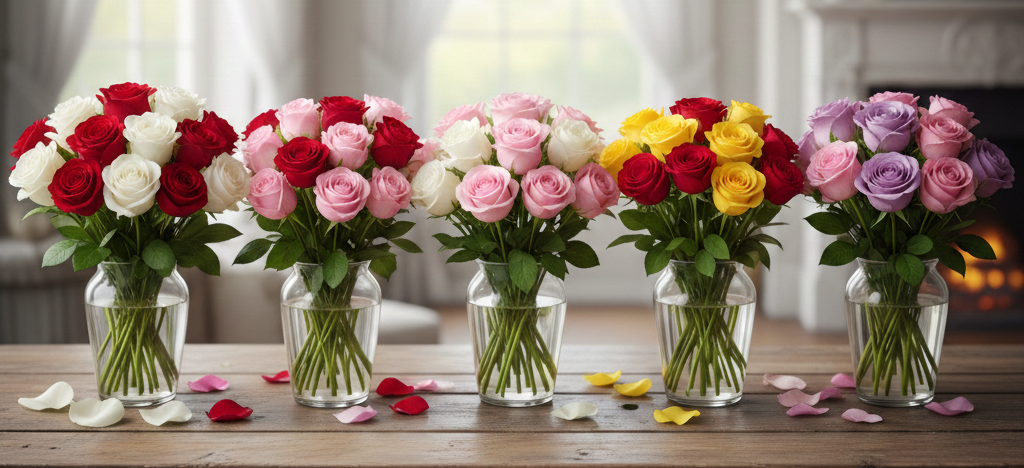
Red roses = deep, passionate love and romance
Pink roses = admiration, sweetness, and “I really like you.”
White roses = pure love, loyalty, and “you’re my safe place.”
Yellow roses = friendship, joy, and gratitude
Purple roses = enchantment, “love at first sight,” fairy-tale vibes
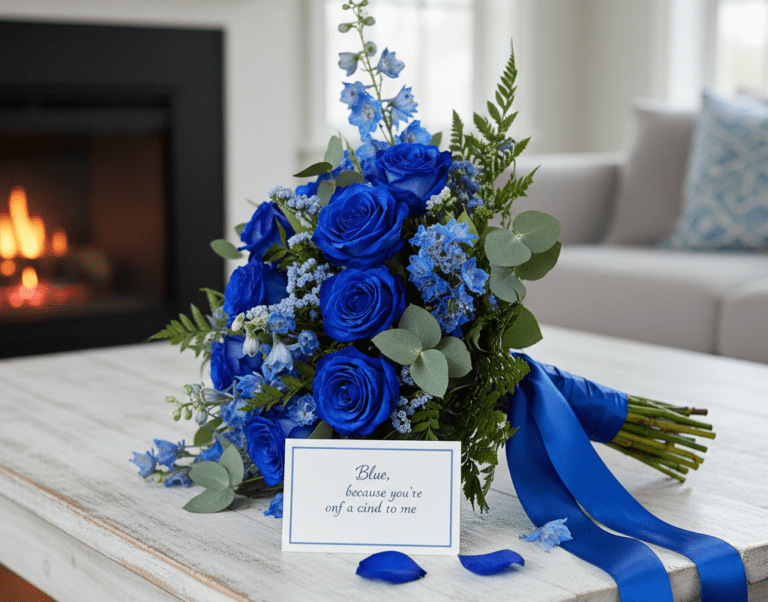
Blue roses / blue flowers = mystery, uniqueness, “you’re one of a kind.”
Black roses (usually very dark red/purple) = edgy, dramatic love or a new chapter
If you’re still deciding what to write on the card (or want a few fun Valentine facts to make your message feel more personal), you will love Valentine’s Day facts guide – it’s full of sweet little details that make gifting feel more meaningful.
So instead of asking, “Which colour looks nicest?”
A better question is:
“Which rose colour actually feels like us?”
The right rose colour for Valentine’s Day is the one that matches what you feel and where your relationship is right now. Let us break that down in a simple way so you can pick the perfect Valentines Day flowers that tells your story, not just fills a vase.
Do Rose Colours Really Matter on Valentine’s Day?
If you are wondering, “Does anyone even notice rose colours for Valentine’s Day?” the truth is: yes, many people do.
Colours are more than aesthetic and carry emotional meanings. When you choose a specific rose colour, you are quietly answering questions like:
“Are we just starting out or deeply in love?”
“Do I see you as a friend, a crush, or a soulmate?”
“Do I want to keep this light, or say something serious?”
So instead of randomly picking whatever looks pretty, it helps to think:
“What do I want this bouquet to say about us?”
Once you know that, choosing the best colour roses for Valentine’s Day becomes much easier.
Red Roses for Valentine’s Day: Classic, Passionate Love
When most people think of Valentine’s Day, they immediately picture red roses – and for good reason.
Red roses for Valentine’s Day are all about:
Deep love
Passion and romance
Commitment and devotion
Red roses are perfect if:
You are in a long-term relationship or marriage
You are ready to say “I love you” clearly and confidently
You want your bouquet to feel classic, timeless, and unmistakably romantic
Best for:
Serious partners
Spouses
Long-term relationships
Quick example:
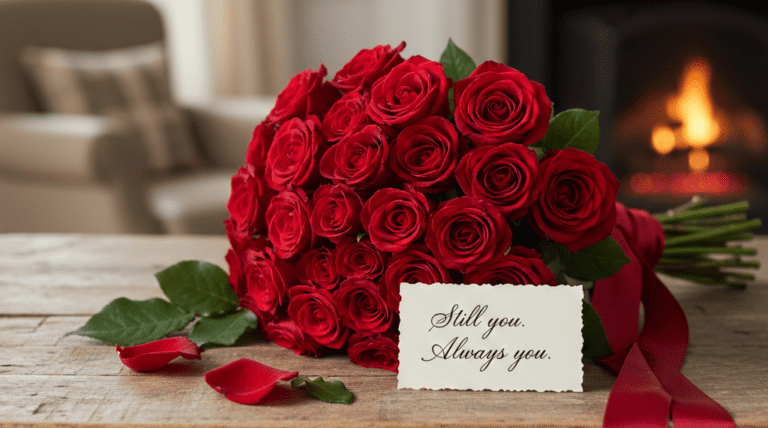
If you’ve been together for years, a dozen or 24 red roses with a simple note like “Still you. Always you.” sends a strong, beautiful message without over-explaining.
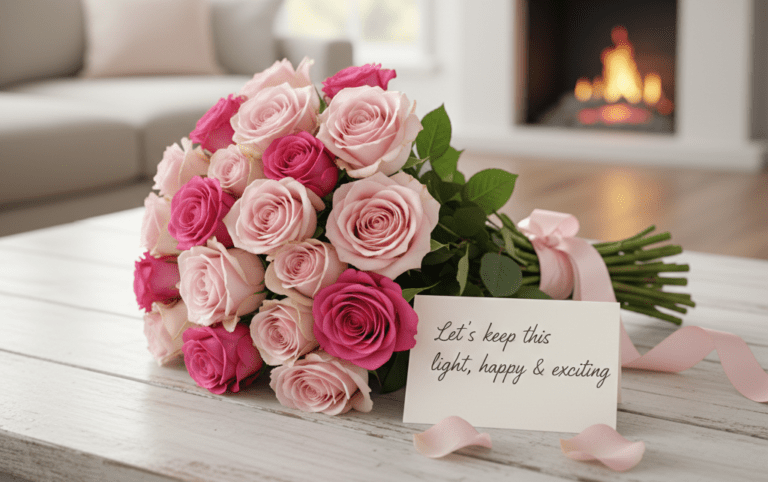
Pink Roses for Valentine’s Day: Sweet, Soft, and Hopeful
If red feels a bit too intense for where you are, pink roses are your best friend.
Pink roses for Valentine’s Day represent:
Affection and admiration
Sweetness and gratitude
Gentle, romantic feelings
They are perfect when:
You are in a new relationship that’s going really well
You have a romantic interest, but don’t want to overwhelm them.
You want to say, “I care about you so much” rather than “I’m wildly obsessed.”
Someone you’re falling for but not yet fully “official.”
Consider the scenario,
If you have been dating for three months, a pink rose bouquet says, “I’m serious about you, but let’s keep this light, happy, and exciting.”
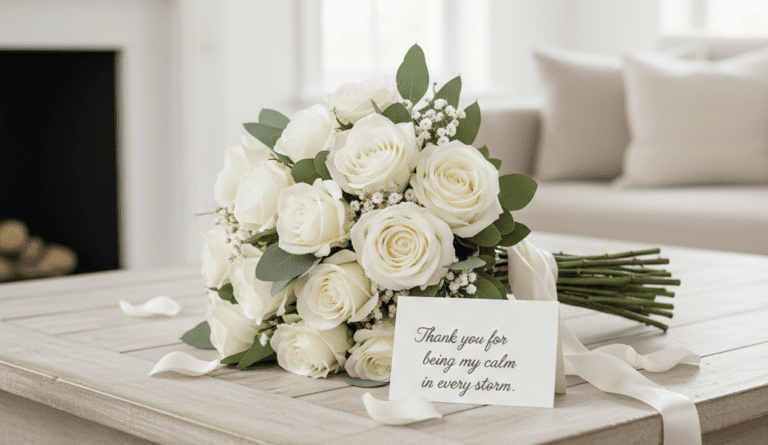
White Roses for Valentine’s Day: Pure, Loyal, and Peaceful Love
White roses for Valentine’s Day are often overlooked, but they can be incredibly romantic in a quiet, sincere way.
White roses are associated with:
Pure love and sincerity
Trust, loyalty, and emotional safety
New beginnings and long-term commitment
They are a beautiful choice if:
Your relationship feels stable, calm, and deeply trusting
You are celebrating a fresh chapter (engagement, moving in together, new marriage)
Your partner loves minimalist, elegant, or neutral aesthetics
Best for
Couples who are deeply connected and value emotional security
Weddings, engagements, or “first Valentine’s as a married couple.”
Someone who doesn’t like “loud” or flashy romance
Nice idea:
Try a white rose bouquet with soft greenery or baby’s breath and a note like: “Thank you for being my calm in every storm.”
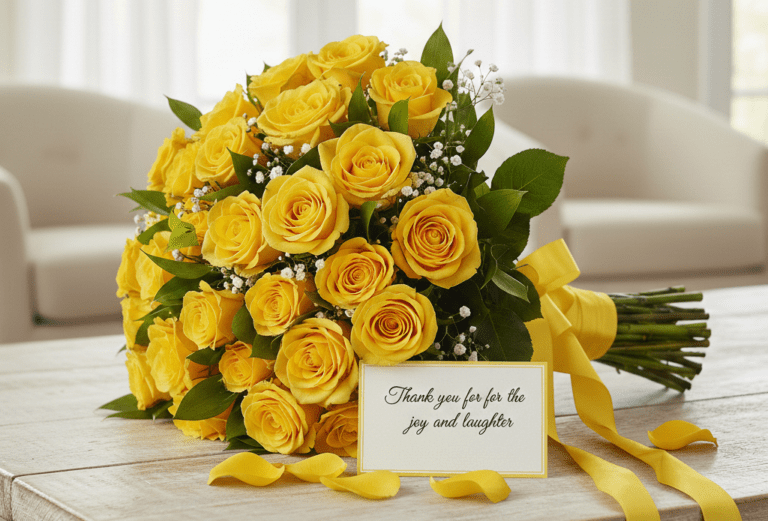
Yellow Roses for Valentine’s Day: Friendship, Joy, and Warmth
Now the tricky one: yellow roses for Valentine’s Day. Many people ask, “Can I give yellow roses on Valentine’s Day, or is that just for friends?”
Yellow roses mainly mean:
Friendship and happiness
Warmth, joy, and positivity
Appreciation and support
They are ideal if:
You’re sending flowers to a friend for Valentine’s Day (Galentine’s, team-mate, colleague)
You want to say “you matter to me” without romantic pressure
You’re grateful for someone’s presence in your life
Best for:
Friends
Siblings or parents
Colleagues or someone you sincerely appreciate
You can also mix yellow roses with red roses if your relationship is a mix of friendship and romance – it’s a lovely way to show “you’re my best friend and my love.”
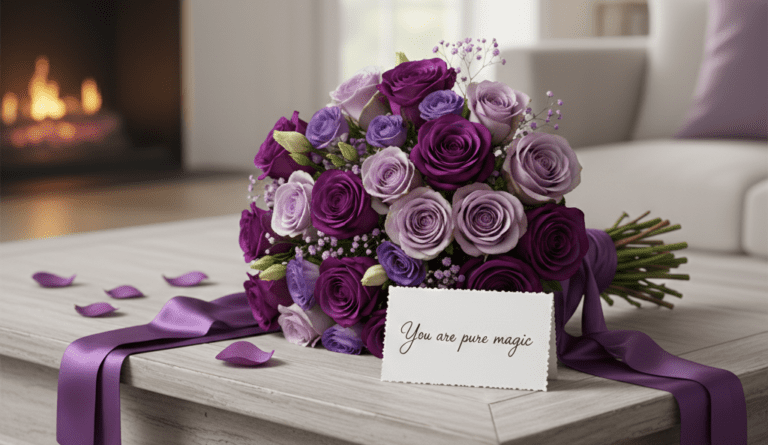
Purple Roses and Purple Flowers for Valentine’s Day: Magical, Intense Crush Energy
If you are searching for purple flowers for Valentine’s Day, you are probably not after “classic romance” – you’re looking for something more dreamy, unique, and fairy-tale-like.
Purple roses and other purple flowers often symbolise:
Enchantment and “love at first sight.”
Mystery and deeper attraction
Royalty, elegance, and a bit of drama
They’re perfect if:
You’re totally mesmerised by someone and want your bouquet to show it
Your partner loves unusual, non-basic colours
You want the bouquet to look a little bit magical or whimsical
Best for:
Intense crushes
Unique, artistic partners
Couples who share a “we’re not like everyone else” vibe
You can also blend purple roses with pink or white for a softer, more romantic effect.
Blue Roses and Blue Flowers for Valentine’s Day: Unique, Rare, and Mysterious
Natural blue roses don’t really exist (most are dyed), but that’s precisely why blue roses for Valentine’s Day or blue flowers for Valentine’s Day feel so special.
Blue blooms are often used to express:
Mystery and uniqueness
“You’re one of a kind.”
Dreams, imagination, and fantasy
Blue flowers work well when:
Your partner loves unusual, non-traditional aesthetics
You want something that stands out from every other red and pink bouquet
You see your relationship as rare, unexpected, or a bit unconventional
Best for:
Partners who love bold, modern looks
Couples with a non-traditional love story
Someone who always chooses the “different” option
A beautiful option is a white rose bouquet with blue flowers (like delphinium or statice) or some blue-tinted roses added for contrast.
Black Roses for Valentine’s Day: Bold, Edgy, and Dramatic
“Black roses for Valentine’s Day? Is that even romantic?”
It can be – but it’s very specific.
Most “black roses” are actually very deep red or purple. They tend to symbolise:
Rebirth or the end of an old chapter
Intense, dramatic love
A darker, more gothic or alternative aesthetic
They can be a powerful choice if:
You and your partner love all things edgy or gothic
You’re marking a big transformation (moving on from the past, restarting your story)
Your partner actively likes black roses or dark themes
For many couples, black roses are too intense or ambiguous, so if you are unsure, it’s safer to stick to red, pink, or white. However, if this aligns with your partner’s personality, it can be an incredibly memorable experience.
Mixed Rose Bouquets: Can You Combine Colours?
You don’t have to pick just one colour. In many cases, a mixed rose bouquet for Valentine’s Day is the perfect way to convey complex feelings.
For example:
Red + white roses → unity, harmony, “you’re my partner in every way.”
Red + pink roses → passionate love + sweetness, great for couples who are both romantic and playful
Pink + white roses → gentle love, respect, and gratitude
Yellow + red roses → friendship + romance, “you’re my best friend and my love.”
If you’re not sure which single colour fits your relationship, think about mixing two that represent how you actually feel.
How to Match Rose Colours to Your Relationship Stage
To make this super simple, here is a quick guide based on where your relationship is right now.
1. New Relationship (0–6 months)
You want something romantic but not overwhelming.
Best picks: Pink roses, mixed pink and white roses
Avoid (usually): Huge bouquets of red or all black – they might feel too intense too soon
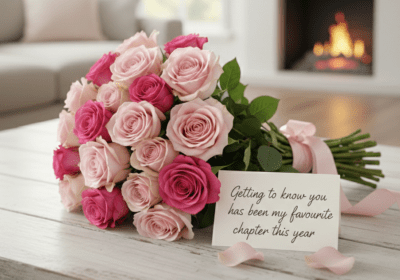
Example
A small bouquet of pink roses with a note: “Getting to know you has been my favourite chapter this year.”
2. Long-Term Relationship or Marriage
You can go full romantic here.
Best picks: Red roses, red + white roses, red + pink roses
Optional twist: Add purple or soft pink if your partner likes colour
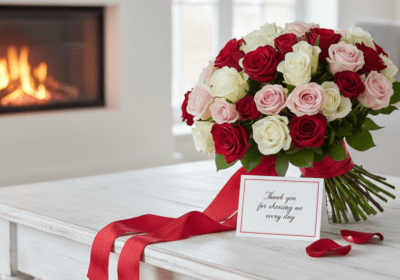
Example:
A large bouquet of red roses with a few white roses mixed in, accompanied by the message: “Thank you for choosing me every day.”
3. Secret Crush or “It’s Complicated.”
You want to show interest without putting too much pressure on yourself.
Best picks: Light pink roses, purple flowers mixed with white or pink
Avoid: All-red bouquet (can feel like jumping five steps ahead)
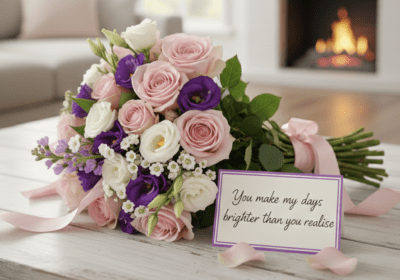
Example:
A pink and purple bouquet with a note: “You make my days brighter than you realise.”
4. Friendship / Galentine’s / Non-Romantic Love
You want clearly non-romantic vibes.
Best picks: Yellow roses, mixed yellow and white, or colourful mixed bouquets
Avoid: All-red bouquet
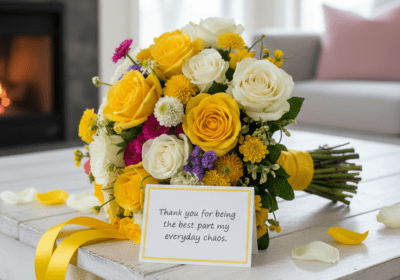
Example:
Yellow roses with a message: “Thank you for being the best part of my everyday chaos.”
5. Healing, Fresh Start, or New Chapter
For couples coming out of a rough patch or starting again:
Best picks: White roses, white + soft pink, white + green accents
Optional: A single dark rose (deep red or black) added as a symbol of leaving the past behind
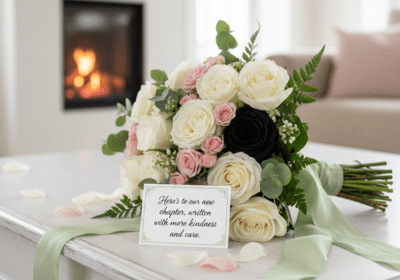
Example:
A white rose bouquet with a note: “Here’s to our new chapter, written with more kindness and care.”
Want an even more personal twist? Pair rose colours with their personality (or even their star sign). Our Zodiac flowers for Valentine’s Day guide makes it easy to choose blooms that feel “so them.”
Practical Tips for Choosing Rose Colours for Valentine’s Day
A few simple steps can help you avoid second-guessing:
Think about their personality.
Bold, passionate, extroverted? → Red, hot pink, purple
Quirky, artistic, unconventional? → Blue flowers, purple roses, black accents
Match the colour to your relationship story.
Best friends-turned-lovers? → Red + yellow
Childhood sweethearts? → Soft pink + white
“We’ve been through a lot, but we’re still here” → White + deep red
Be honest about the message you’re sending.
If you’re not ready for serious romance, skip all-red bouquets
If they’re firmly “just a friend,” stay in the yellow / mixed-colour zone
Add a short explanation on the card.
“Pink, because you make my life sweeter.”
“White, because you’re my safe place.”
“Purple, because you’re pure magic to me.”
That tiny explanation makes your choice feel intentional, not random.
How to Pick the Right Rose Colours for Valentine’s Day
When you’re finally ready to order, run through this simple checklist:
Who is this for?
Partner/spouse / crush/friend / family
What do I want this bouquet to say?
“I love you” / “I like you” / “Thank you” / “You’re special.”
Which colour matches that message?
Red → deep romantic love
Pink → sweet, growing feelings
White → pure, calm, loyal love
Yellow → friendship and joy
Purple → magical, intense attraction
Blue → unique, rare connection
Black → edgy, intense, or new chapter
Should I mix colours to reflect our story better?
Red and white, pink and white, yellow and red, and so on.
Did I include a brief, personal note on the card explaining my choice?
Final Thought: The “Right” Rose Colour Is the Honest One
At the end of the day, there’s no strict rulebook that says, “you must send this exact colour.”
Rose colours for Valentine’s Day are simply a way to translate your feelings into petals and colour. If you choose thoughtfully and add a genuine message, your bouquet will feel right – whether it is red, pink, white, yellow, purple, blue, or even black.
So, the real question isn’t just “What colour roses for Valentine’s Day?”
It is:
“What kind of love am I celebrating – and which colour tells that story best?”
Planning ahead for Valentine’s Day in the UAE? Here’s a practical guide on timing, popular gifting trends, and flower ideas: Valentine’s Day 2026 in UAE: gifting flowers & ideas. It’s especially useful if you are ordering early or choosing delivery slots.
White roses are a beautiful choice for Valentine’s Day when you want to express pure love, loyalty, respect, or a fresh beginning in your relationship.
Blue roses or blue flowers express mystery, uniqueness, and “you’re one of a kind,” while very dark “black” roses suggest intense, dramatic love or a bold new chapter.
Zahrat is a luxury floral and gifting content specialist with hands-on experience in premium flower delivery and curated surprise gifting. Her writing is informed by real customer gifting behavior, industry best practices, and evolving floral trends. She creates accurate, helpful, and trust-focused content that guides readers in making confident, high-value gifting decisions for birthdays and special occasions.